Music Directors and Composers
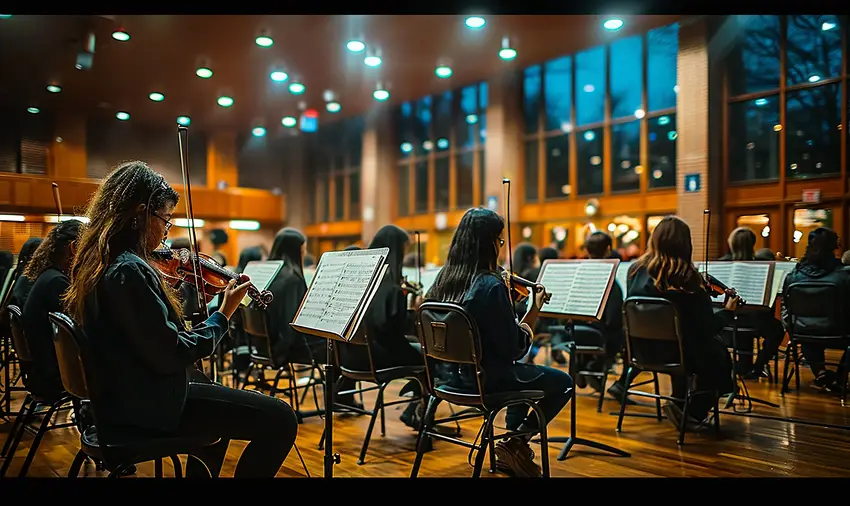
Music directors and composers bring musical performances to life by leading orchestras, bands, and other groups during concerts and recording sessions. They write original music, arrange existing pieces into new compositions, and direct rehearsals to prepare performers for shows. Using digital music software and recording technology, they collaborate with musicians, select guest performers, and interpret musical scores to create memorable performances. This career combines creativity with leadership skills and often requires formal music education, strong communication abilities, and experience with both traditional conducting techniques and modern music production tools.
Did you know?
A degree in music, communications, or related field combined with strong industry connections is essential for breaking into the competitive American music curation market.
At a glance
Typical average pay
$60,900 Avg/yr
Growth
Stable
Top skill
Active Listening
Things to consider
Digital Platform Proficiency
Expertise in streaming platforms, playlist algorithms, and digital music distribution is crucial as the American music industry increasingly shifts toward online consumption.
Cultural Diversity and Genre Knowledge
Understanding America's diverse musical landscape across genres, regions, and cultural communities is vital for creating inclusive and commercially viable music collections.
Key responsibilities
Produce recordings of music.
Plan and schedule rehearsals and performances, and arrange details such as locations, accompanists, and instrumentalists.
Perform administrative tasks such as applying for grants, developing budgets, negotiating contracts, and designing and printing programs and other promotional materials.
Meet with soloists and concertmasters to discuss and prepare for performances.
Copy parts from scores for individual performers.