Nanotechnology Engineering Technologists and Technicians
Nanotechnology Engineering Technologists and Technicians help turn cutting-edge nanoscience into real products by running high-tech equipment that works with materials thousands of times smaller than a human hair. They operate tools such as atomic force microscopes and scanning electron microscopes, mix and test chemical formulas, and follow strict cleanroom and safety rules while collecting data and checking how tiny particles behave. They also help scientists and engineers improve production processes, compare different nanomaterials for performance and environmental impact, and document results so successful experiments can be scaled up for larger manufacturing.
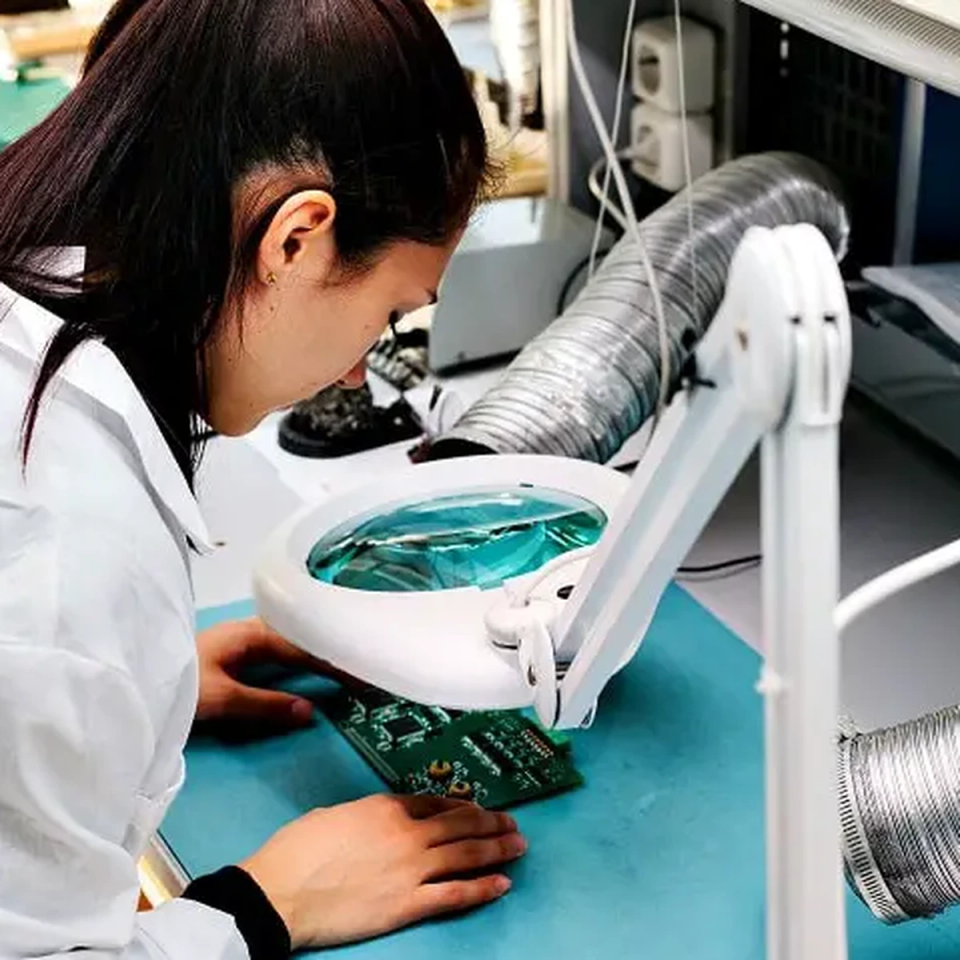
Did you know?
Most positions require an associate degree in nanotechnology, materials science, or related engineering technology field, with many employers preferring candidates who have completed specialized nanotechnology certification programs.
At a glance
Typical average pay
$65,300 Avg/yr
Growth
Stable
Top skill
Reading Comprehension
Things to consider
Safety and Regulatory Compliance
Professionals must be well-versed in federal safety regulations from OSHA, EPA, and FDA regarding nanomaterial handling, as the field involves working with potentially hazardous substances at the molecular level.
Geographic Job Concentration
Employment opportunities are primarily concentrated in technology hubs like Silicon Valley, Boston, and Research Triangle Park, where major corporations and research institutions invest heavily in nanotechnology development.
Key responsibilities
Collect or compile nanotechnology research or engineering data.
Assist nanoscientists or engineers in processing or characterizing materials according to physical or chemical properties.
Assemble components, using techniques such as interference fitting, solvent bonding, adhesive bonding, heat sealing, or ultrasonic welding.
Monitor hazardous waste cleanup procedures to ensure proper application of nanocomposites or accomplishment of objectives.
Monitor equipment during operation to ensure adherence to specifications for characteristics such as pressure, temperature, or flow.